A Brown Rice Fast
Soothing, calming, and warming.
Yes, you can fast on rice! A brown rice fast is actually an ancient practice dating back thousands of years. While it is a milder form of fasting, it offers the same benefits all fasting methods offer and has its own unique advantages.
I first heard of it during a stay at the Kripalu Center for Holistic Health back in 1985. I was taking a month-long course that was offered as an overview to a variety of holistic and spiritual practices. Among those was the practice of fasting as an adjunct to Conscious Eating as a life choice and spiritual discipline. But they didn't just talk about fasting, this was a hands-on course. So, we fasted for three days.
We (a class of about 25) were given the choice between a brown rice fast and a fruit fast, specifically, on oranges. We could have 1-2 cups of rice per meal, 3 meals per day. Or we could eat 1-2 fresh oranges per meal, for 3 meals per day. Though in both cases we were admonished to try to only eat the smaller portion if possible.
To help us with this decision we were told that if we typically felt very grounded in our lives, more heavy and analytical, found it difficult to dream dreams of fancy, to allow our feet to come up off the ground, we should do the orange fast, as a fruit fast would aid in lightening us emotionally, mentally and spiritually.
Alternatively, if we generally felt light and spacey, ungrounded, felt unconnected, lost and confused, that a brown rice fast would be more grounding and warming.
Otherwise, we were told, the two fasting styles would deliver the same benefits. The cleansing and detoxing of accumulated wastes stored in our bodies would begin. The clarity in our meditations would improve. Our flexibility in our yoga sessions would improve. All of that proved to be true.
While I chose the orange fruit fast that day, many in our class chose the brown rice fast. Their experiences were just as wonderful and expansive as those of us on fruit. Actually, those of us on fruit envied the rice fasters their warm bowls of "solid food" at mealtime, especially on the colder days.
A brown rice fast can alleviate many digestive troubles
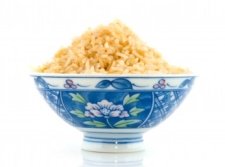
Even slight fasting with brown rice can help with digestive problems. I had a girlfriend with ongoing digestive pain. Irritable bowel syndrome, allergies, diverticulitis, and ulcers were all considered possible culprits, but she never allowed the doctor to do all the testing necessary to identify and label, diagnose, the problem. She felt certain that would become a lengthy, expensive process possibly ending with a still unclear prognosis, while she knew too, that whatever it was could likely be managed through diet.
What she found helpful instead, was a one-day brown rice fast. When her symptoms were most acting up, she would eat nothing but brown rice all day on a Saturday. Just that little bit of effort, just that much rest for her digestive system, was enough to rebalance her; it was enough to alleviate her most acute symptoms. She always said she felt better and wished she would rice fast more often.
A brown rice fast is a gentler method of fasting
and can be very soothing
A brown rice fast can be more stabilizing than other types of fasts. Brown rice is a complex carbohydrate, metabolizing and delivering energy-giving sugars slowly, over time. Fruit, on the other hand, is comprised of simple sugars, more quickly metabolized, and can lead to highs and lows in some people. But a brown rice fast can feel very calming and soothing.
Fasting in cold climates or in the winter can be made easier and more comfortable if done with brown rice, as it is more warming than other types of fasts.
In contrast to a water fast which can cause more symptoms of discomfort due to its intense detoxifying, a brown rice fast is milder and much more gentle. While you will detox, and potentially show some symptoms, they will be milder and more comfortable.
There are health professionals who feel it is better to fast in a way that does not produce extreme symptoms--that the extreme symptoms can indicate a too quick release of toxins into the bloodstream, creating an intense burden on the body. They suggest using mild fasting methods such as rice and/or cleansing diets to detox more slowly and gradually. This would most specifically apply to older and/or more frail individuals.
The many proponents of a brown rice fast
Annemarie Colbin, in her book Food and Healing, reports good results from a brown rice fast in those coming off of sugar and recreational drugs. She suggests, however, balancing the more acidic rice with alkaline foods, such as seaweed or miso. This may only be an issue on fasts of longer duration--more than 5 days.
Also, if one is concerned about acid foods, you can fast on other grains. Quinoa, millet, and buckwheat groats (not a wheat product) are all considered alkaline foods. It is best not to use wheat due to the prevalence of undiagnosed wheat and/or gluten allergies, not to mention, Westerners already consume a disproportionate amount of wheat.
The founder of the macrobiotic diet system, George Ohsawa, proposed a strict brown rice diet as a cleansing regimen for the sick. A later proponent of the macrobiotic diet, Michio Kushi, claimed that a strict brown rice diet conferred spiritual enlightenment on the adherent. It is interesting to note that brown rice is considered by many Asians to be the "perfect" food, as they believe it to have a perfect balance of yin and yang energies.
Traditional Ayurveda (the 5,000 year-old art of health and healing) is a proponent of the brown rice fast in the form of the dish called Kitchari. This type of fast is sometimes called a "kitchari cleanse", as it is a form of cleansing diet. It combines mung beans with the most balanced of the rice types: basmati.
According to Vasant Lad, in The Complete Book of Ayurvedic Home Remedies, you can fast on kitchari for up to 5 days. It is said to be nourishing and balanced, easily digested, and cleansing in nature. Kitchari can also be used in the process of breaking other fasts, like water, juice or fruit fasts, due to its mild nature. (See this link for more information on kitchari, including recipes.)Soaking grains for the best nutritional value
Our modern methods of cooking grains are insufficient at making the nutrients bioavailable to us. The newest research is showing that most grains really should be soaked or fermented before cooking. This is very similar to the process we use in soaking beans overnight before cooking.
In grains, this soak is shown to improve nutritional value and benefits. When we're fasting on one food, it becomes all the more important to maintain the highest quality possible in that one food. Click here for more information on soaking grains for a brown rice fast.
Tips for a brown rice fast:
- Plan on 3-6 cups of rice per day, keeping to moderation as much as possible.
- Only use a whole grain! Ayurveda recommends brown basmati rice as the most balanced rice, as it is deemed acceptable
for all three doshas.
- Be sure it is cooked thoroughly. And for easier digestibility and greater nutrients, soak brown rice for at least 7
hours before cooking. See here for information on soaking rice.
- A bit of sea salt on your rice is ok. The
higher the quality of your sea salt, the more this is acceptable. At
Kripalu we were
allowed a bit of gomasio--salted sesame seeds. Sesame seeds are
full of calcium, and thus alkalizing. You can also add a strip of
sea vegetable to your cooking rice or a small amount of miso to
the cooked rice for the same effect.
- A bit of cayenne pepper on your rice can be warming.
- A teaspoon of butter or ghee with your cup of rice is good as well. Saturated
fats are necessary to a healthy body and butter contains important vitamins. For strict vegans,
virgin coconut oil may be used. These fats are
thought to aid in the elimination of fat-soluble toxins and are used in tissue repair.
- You can make a big pot of brown rice or other grain in the morning from which to eat all day.
Resist the temptation to reheat it in the microwave, but instead, steam it with a vegetable steamer on the stove top, or in a lidded skillet on low with a little added water, or covered, in a toaster oven. See this page to understand the dangers and toxins created by microwaves.
Or, you can always just eat it room temperature. - As a special treat, use a piece of your best fine china (the stuff you hardly ever get to enjoy) during your fast.
For all fasts:
- Preparation - Prepare for a
fast by eating fewer and lighter meals for a couple days prior. The
length of preparation
is based on the intensity and length of your planned fast. The
longer and/or more intense the fast, the more days of preparation you
should make. For a one day fast, you can just eat a light dinner
the night before.
If you drink caffeinated beverages, wean yourself off prior to your fast to avoid the withdrawal headache. - Water - Drink at least 2 quarts of
water. Fresh
squeezed lemon may be added to your water, as it not only imparts
a bit of flavor, but will contribute beneficial living enzymes.
- Activity - Plan for a light workload during a fast. Don't overdo. Moderate exercise is ok, even helpful, but save the more
strenuous workouts for another time. Walking and yoga are particularly well-suited to fasting.
- Help your body detox - Take time to do breathing
exercises to help you shed toxins and oxygenate your blood, as well as
dry skin brushing to enhance the body's ability to detox through
both the skin and the lymphatic system.
- Rest - Get plenty of rest and allow yourself naps during the day if you ever feel the need.
- Tips - Read the Water Fasting Tips page as most
of the information there can be helpful during any type of fast or cleansing diet.
- Colon health - Enemas aren't necessary during any kind of fast. It's ok if the bowels don't move regularly.
What can be helpful is to add a psyllium cleanse to your daily routine by adding 1-2 tablespoons of psyllium husks to a glass of water one or two times per day. Or see this colon cleanse recipe and instructions.
Psyllium is a natural fiber laxative that is excellent for cleansing the intestines. It is available in most pharmacies, in the laxative section, or organically-grown can be found in health food stores. Be sure to drink plenty of water with psyllium as the package will tell you.
See here for other colon cleansing options. - Breaking the fast - Coming off a fast requires special attention as well. Do so slowly, easing back into regular
foods. See the Guidelines for Breaking a Fast page for more
information.
Again, the length and intensity of the fast performed will dictate how many days you take to re-acclimate your body to regular eating. For a 10-day fast, at least three days of easing back in is recommended; for a 3-day fast, 1 or 1 1/2 days of transition is good. - After the fast - Pay attention to the subtle signals from your body as they can guide you to the
foods most appropriate for your needs. Check out the Recipe Section of this site for ideas.
Trying to incorporate more whole grain dishes in your diet? See Brown Rice Recipes for ideas.

You may also like
How long should you fast? Discover what length of time is best for you and how much preparation is required.
Health Conditions Improved by Fasting See the compiled list of ailments that are known to respond favorably to fasting
Fibromyalgia and Fasting - Mae shares how she uses fasting to help her cope with fibromyalgia.
The real benefit of Fasting for Weight Loss is the clarity brought forth about our mental and emotional patterns.
Emotional Benefits of Fasting offers insight on the healing effects fasting has on our emotional and mental patterns.

Recent Posts


-
Valter Longo and the Longevity Diet
Valter Longo's Longevity Diet, which is a fasting mimicking diet, is showing great promise as a prescribed therapy. If you haven't heard of Valter Longo, check out his newly launched website to follow… -
Fasting Overview for Beginners
Information on fasting especially geared toward the beginner. Important guidelines on fasting including the contraindications and how to do a simple one-day fast. -
Meat vs. Vegan | AllAboutFasting
Confusion seems to arise as to whether this site promotes meat-eating or veganism. Let's set the record straight and talk about ideal diets. Ideal for whom? Each of us individually.